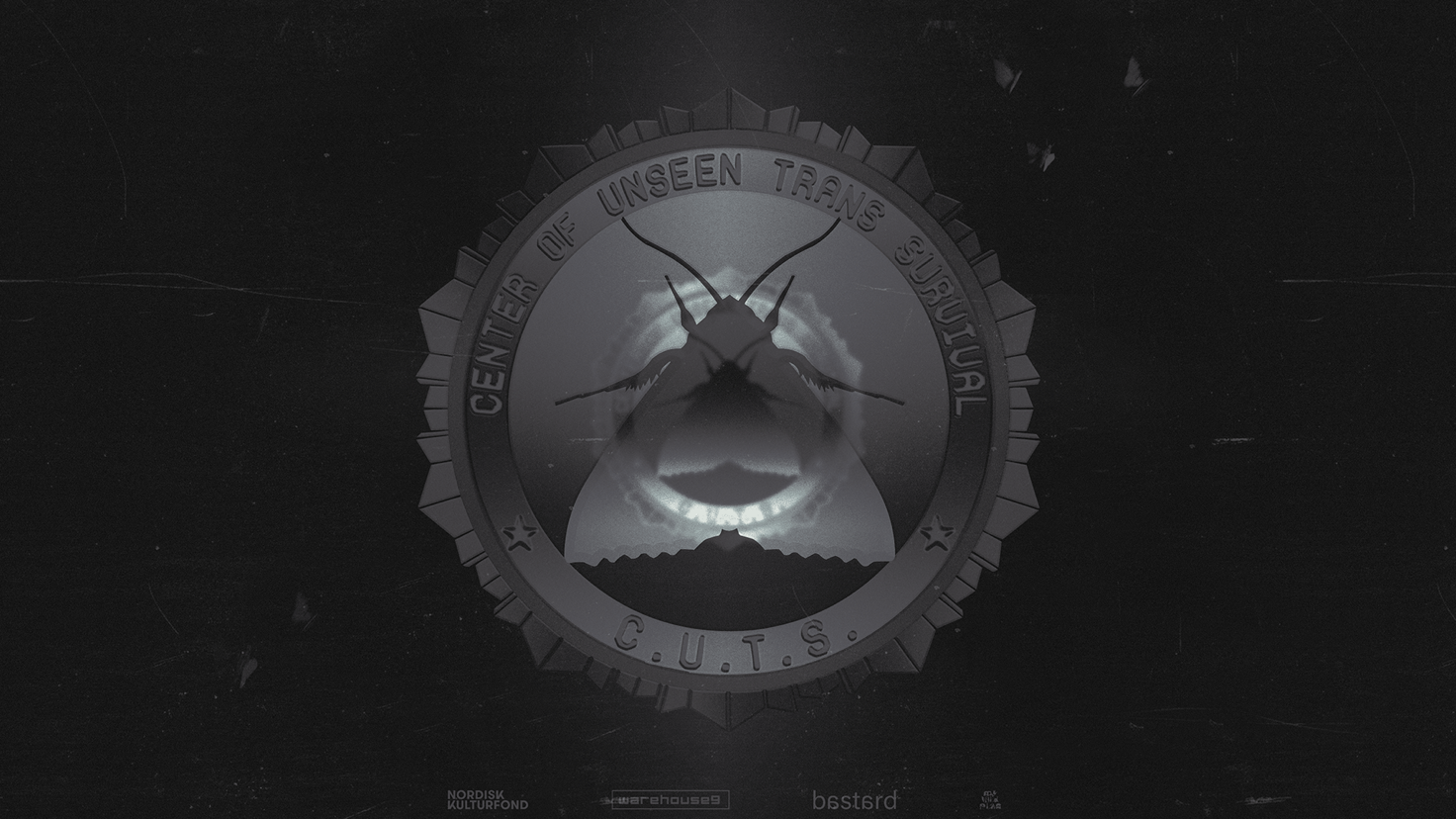
Center of Unseen Trans Survival (C.U.T.S) is an artist run initiative, founded by artist Ruby Nilsson. The aim of C.U.T.S is to sustain and realize the visions of trans artists and investigating strategies of trans survival.
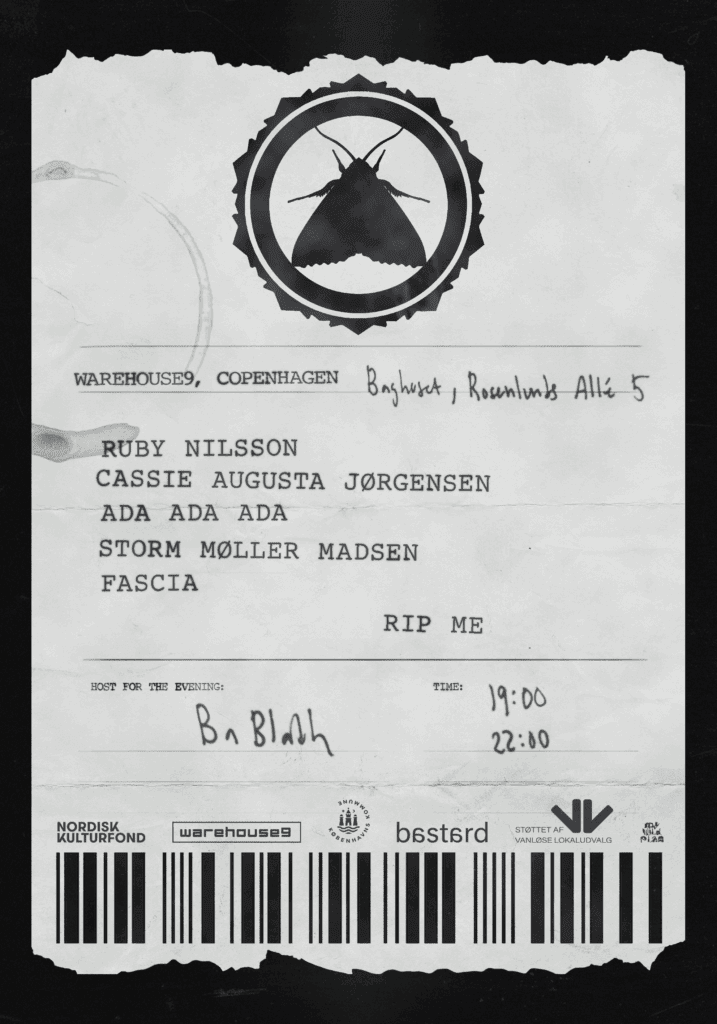
On October 23rd Warehouse9 in Copenhagen hosted C.U.T.S. for the evening, with a program which included Ruby Nilsson, Cassie Augusta Jørgensen, ADA ADA ADA, Storm Møller Madsen and Fascia.
The host for the evening was Ba Bladh.
Ba Bladh started of with a performative monologue, setting the stage to the thinking that ran throughout the evening, in the five different performances, we were all about to see.
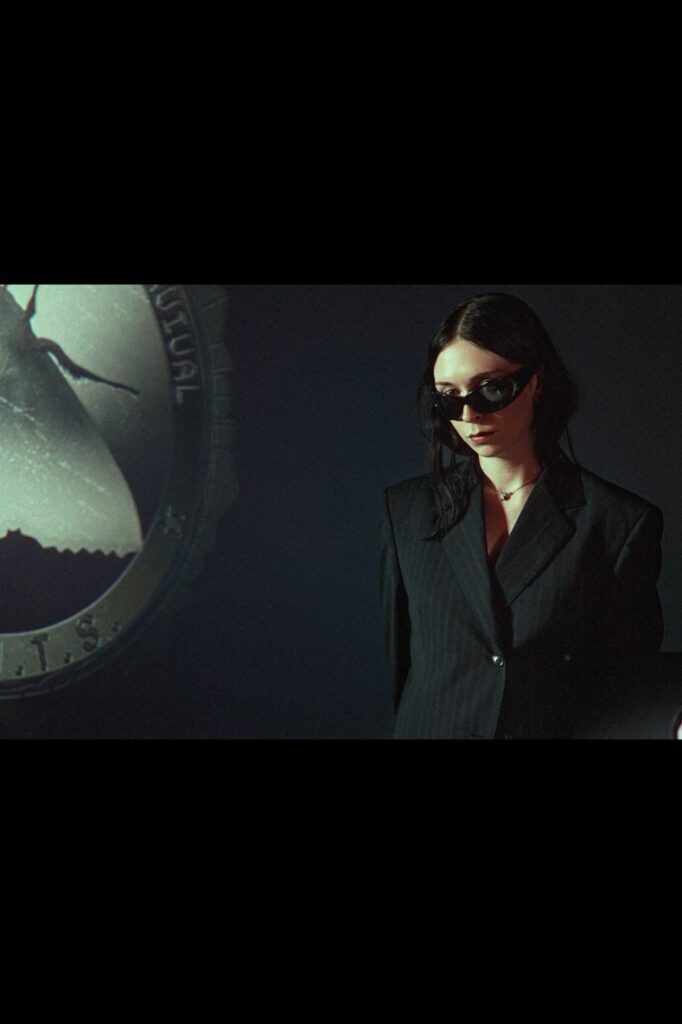
They were dressed in a grey suit, white shirt and black tie. Large black sunglasses with a fly like aesthetic covered their eyes, face painted white, hair slicked back, creating a conundrum of clashes between styles.
On their suit they carried the sign of the moth, the same as the logo of C.U.T.S, an intelligent nod to all the beings who flourish and live in a state that is not accessible to those who need the clear, sharp sunlight to navigate the world.
The atmosphere was inviting and open as Ba Bladh quickly stated, as a way to make fun of transphobic notions:
I´m a people person
Flag the 5th of September.
The opening speech had something of a sermon about it which made it even more funny than in already was. Who gets to preach and what message is broadcasted seemed to be an underlining question.
We are gathered here today to sacrifice
Ba Bladh asked a series of questions, opening the thinking to all bodies present:
Is art about making sex?
Is art about trouble with having a sex?

Flag the 5th of September.
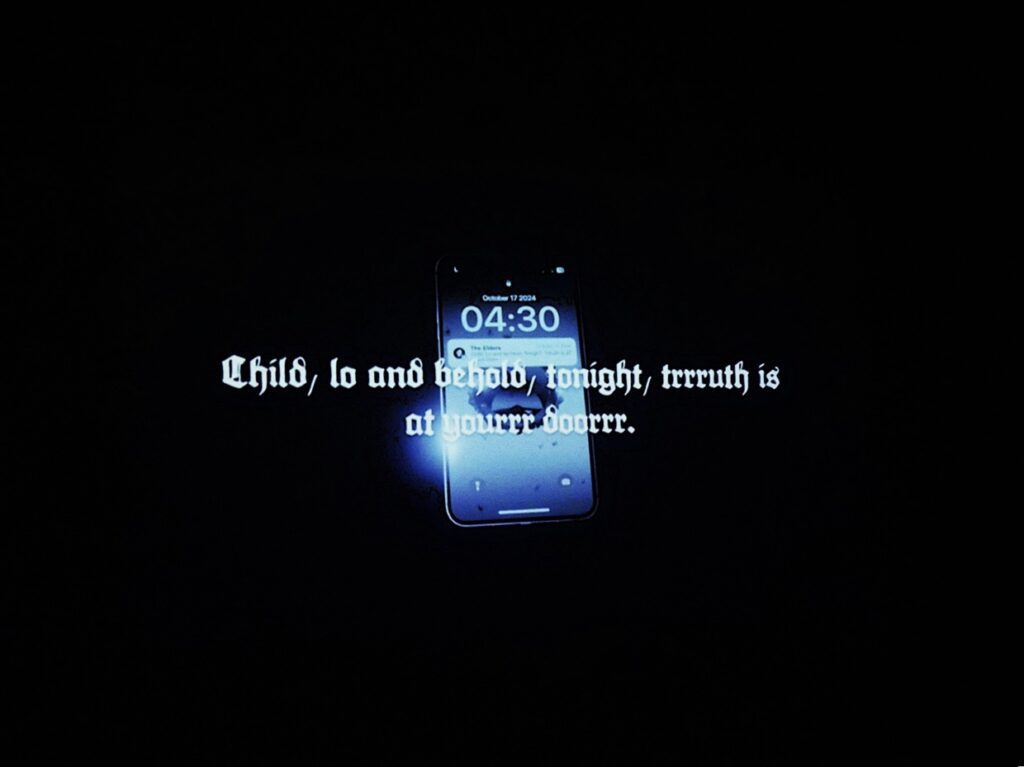
Ruby Nilsson, who besides being the initiator of C.U.T.S, also works as an artist and writer, played Ba Bladh’s assistant and staged and choreographed the whole night as well as showing her own work, Magna Paranoia. It was an animated video work, where an agent was assigned to a case on chaserdom by ‘The Elders’, whom we as audience never know who were, as a script that is downloaded without a clear sender.
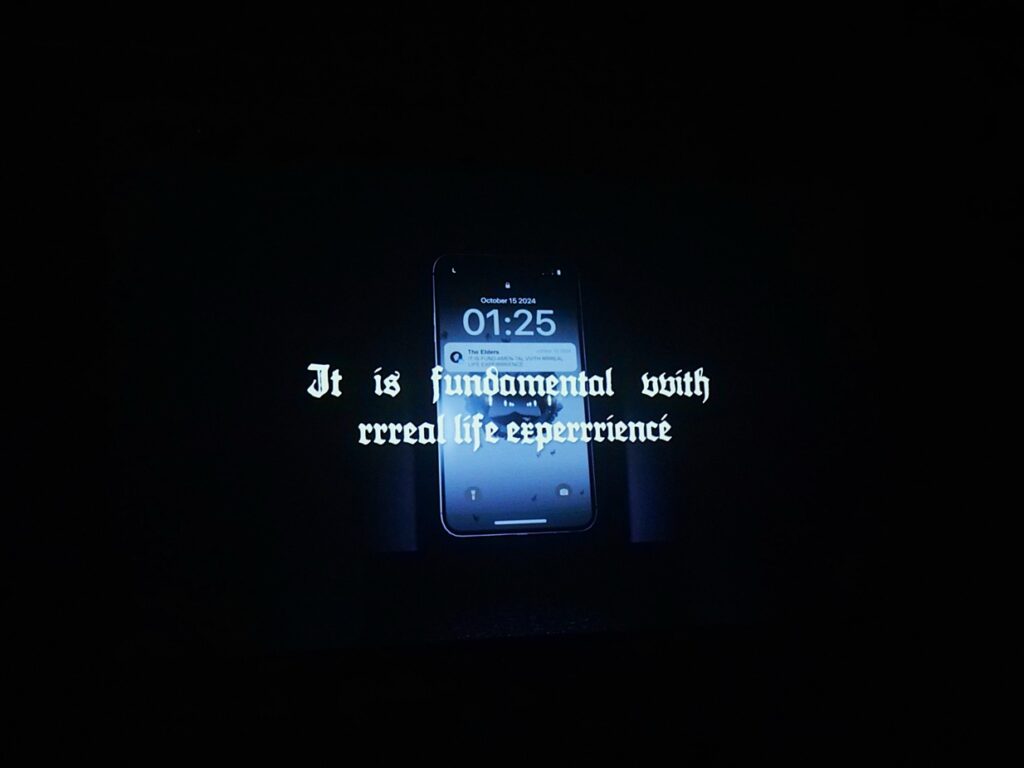
Magna Paranoia investigated the trope of a chaser. Layers of reality were intertwined, and the work made the audience laugh with its undressing of stereotypes, such as describing the caser as a man with multiple tattoos, “small and ugly” and “a love of overshirts, which you can style with anything.” – a cis-het-male who has never had to question himself, his thinking or behavior.
The protagonist, the agent, falls short in understanding the chaser, even through research, as perhaps it’s a case which is defined by not actually making sense – the stupidity of someone, a chaser, reducing another person to their body parts.
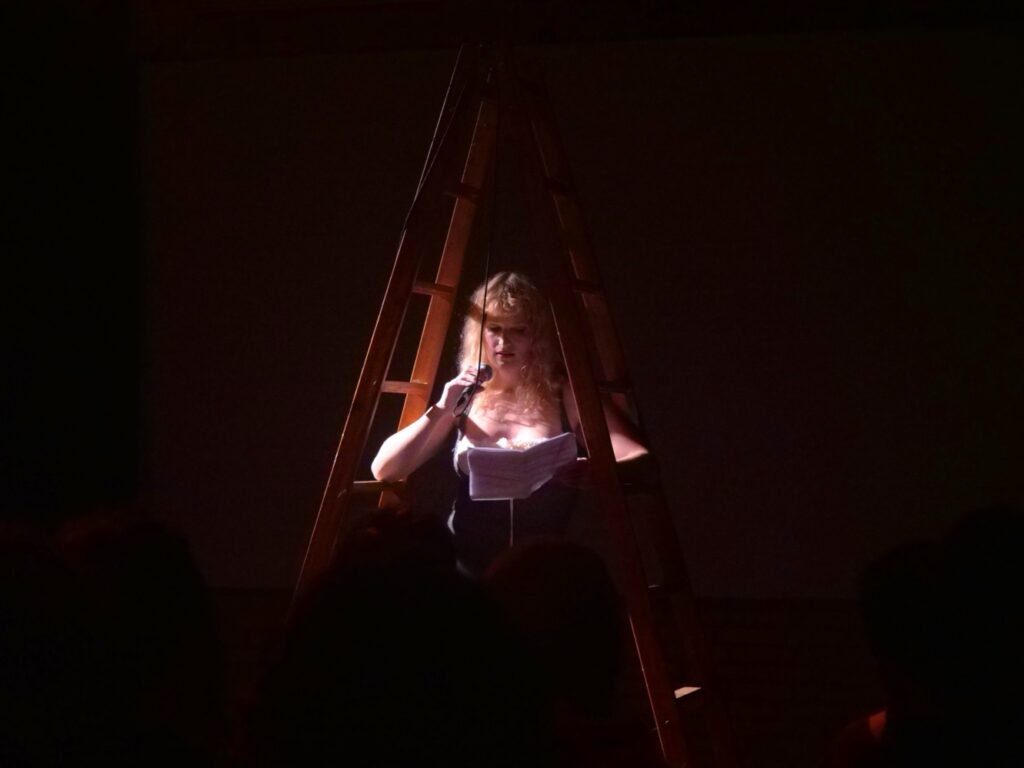
After a short break Cassie Augusta Jørgensen performed her piece Natures Freak. She entered the stage wearing lingerie and began a choreography with a ladder, placing herself around it and under it, perhaps as a nod to the idea of both climbing a ladder as to reach somewhere new as well as the old superstition, where you are cursed if you pass under a ladder.
She began reading from a manuscript, based upon Shakespeare´s Hamlet, yet revised and changed as to be about a transwoman. The tragedy unfolds as the performaner speaks out an internal dialogue, questioning how to be in relation to her dead father, who left her a heritage of ideologies.
Jørgensen plays with her body, making it clear how difficult it is to stage oneself in a sexy manner and lets out sighs many times throughout the performance, making the audience laugh, as this transwoman version of Hamlet dreams of having sex with her best friend Horatio, instead of Juliet, in an violent manner where Horatio stabs her and then slides into the wound to penetrate her.
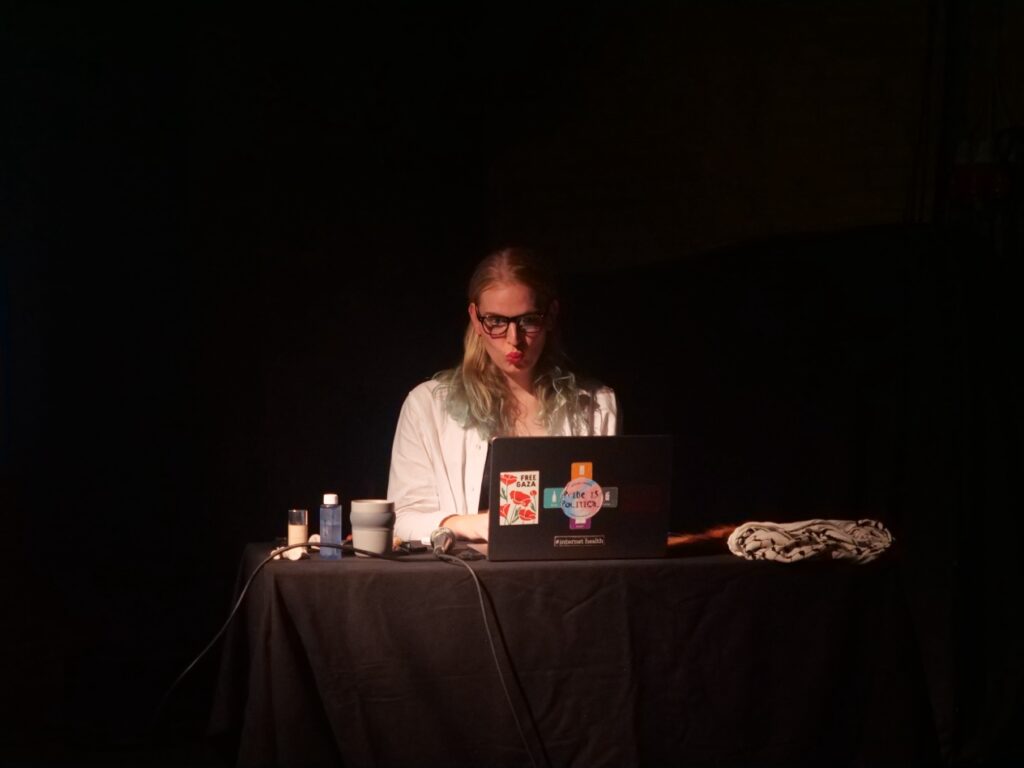
Next up was Ada Ada Ada, an algorithmic artist, who among other things works with AI.
Her work was entitled In transitu, which means: during passage from one place to another. When looking further into Ada Ada Ada, an IG site came up, where she posts updates from her gender transition, where she asks in the header “when will Instagram ban my nipples”
What possibilities and how gender expressions are conceived and viewed is the focus of In transit.
Ada Ada Ada used a live protocol, where she interacted with her computer through a webcam. The live protocol responded to how Ada Ada Ada used her facial expressions, if she pursed her lips, wore make up, had her hair up or down, whether she smiled, looked angry, made her eyes small or big. It was a playful and humorous performance, which ones again made it obvious that the preconceived notions of what constitutes a masculine or feminine expression is outdated and useless.
The program indicated how feminine or masculine it perceived her to be, via pre-existing data collected in a manner which was unclear for the user of the program, yet what was made clear was that it operated through stereotypical notions, such as the fact that a ‘man’ would look more angry and a ‘woman’ would be more smiling, wear lipstick and blush etc.
Storm Møller Madsen gave a lecture from their research, which will soon come out in its full length in their dissertation at the University of Copenhagen, entitled Turning Toward Each Other: Trans-separatist Sensibilities, Communal Becoming, and Survival in Contemporary Trans Performance Art.
The talk was held in a calm and serene manner, where Møller Madsen read out loud several pages, emphasizing essential points in quotes projected on the wall behind them.
With examples from art, such as Jules Fischer and Luca Holmegaard, Møller Madsen opened a thinking which evolved around separatist t4t communities, where they themselves had invited artists to meet and talk, as to how to express oneself within this field and arena, as well as how that impacted the individual.
The talk moved from engaging with theory to speaking of specific performances and books to personal anecdotes of when Møller Madsen went to the Center for Gender Identity and the harsh reality of the harassment which is part of the assessment.
Although the talk touch upon the stigmas and loneliness which many transpeople face, what stood out was hope and how to build community through togetherness.
The evening ended with a tech-infused soundscape by FASCIA. Playing with the lights dimmed down the audience was left to take in the whole of the evening while FASCIA played a composition that moved as fluently as identity and sexuality should be allowed to be.